
Short runs, one thumb, and no drama when you lose signal: these three are my go-to subway games.
Vampire Survivors: the perfect 12-minute mistake

I keep Vampire Survivors installed for the same reason I keep a pack of gum in my bag: it fixes a specific moment. You know the one. You sit down, you realize the train's crawling, and you want something that starts instantly and doesn't ask you to remember a plot thread from last night. This is that. You drag one thumb to steer, the weapons fire on their own, and within 30 seconds you're making tiny choices that snowball into either a ridiculous power fantasy or a tragic pile of bats and regret.
What makes it sing as Fun & Entertainment, not just “something to do,” is how loud the feedback is even with your volume low. The chest jingle hits, the gem vacuum sound is pure dopamine, and the screen fills with that “I can't believe my phone is doing this” chaos that makes the commute disappear for a minute. On my iPhone, it runs smooth, but I still set it to a lower brightness because the pixel fireworks can be a lot in a dark car. It's also oddly social in the way a good arcade cabinet is social. Someone will glance over, see the swarm, and you can tell they want to ask what it is.
Practical tip from someone who's eaten it at the worst time: if you're playing in stop-and-go service, turn off any cloud-saving prompts before you leave home. The game doesn't need a connection to be fun, but nothing kills the buzz like a pop-up when you're two minutes from the 10-minute mark and your build is finally cooking. And yes, you'll miss your stop once. Consider it a rite of passage.
Mini Metro is my "headphones on" puzzle
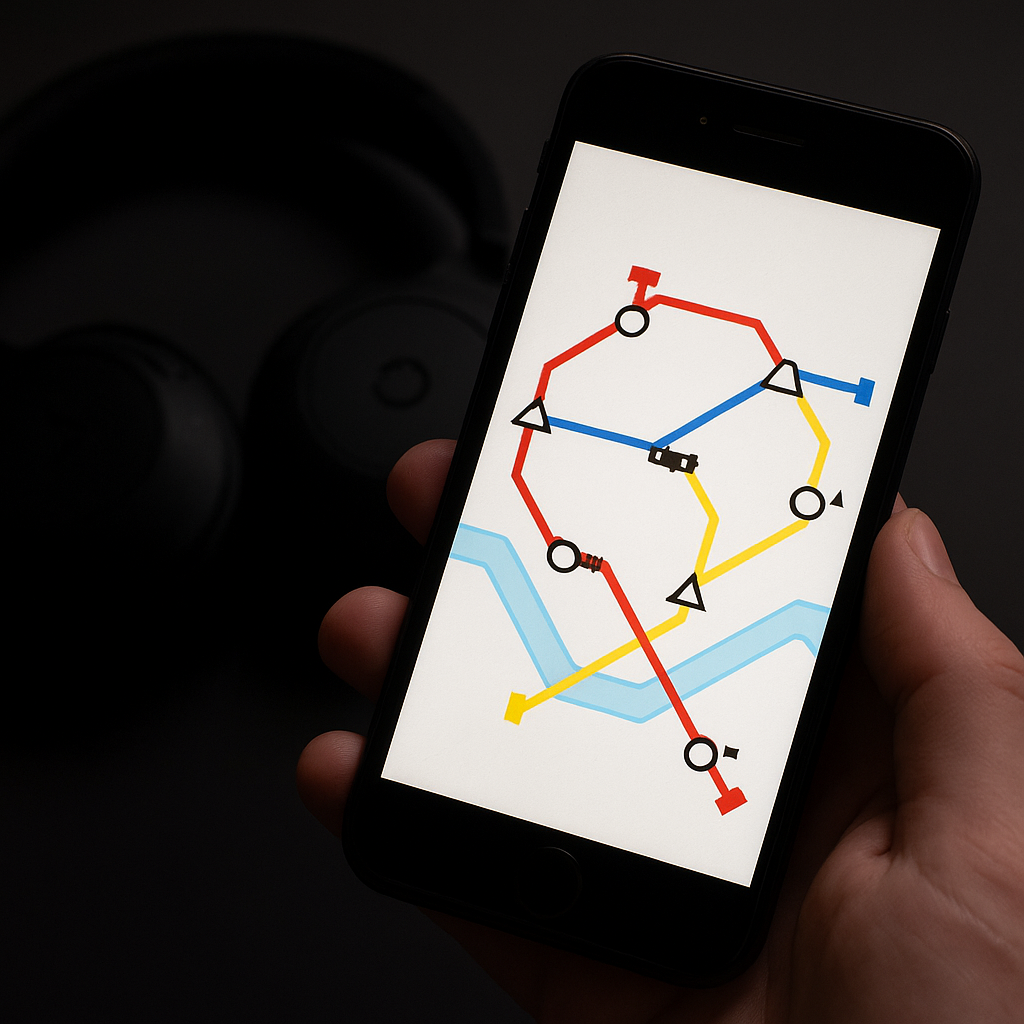
Mini Metro is the game I open when I want my brain to click into place. It looks like design candy: clean colored lines, simple station shapes, a little train sliding along like it's in a museum exhibit. Then five minutes later you're sweating because the circle stations won't stop spawning and you've got one lonely locomotive trying to serve half of “London.” It nails that entertainment sweet spot where it's soothing until it isn't, and the tension comes from your own choices, not from some obnoxious countdown yelling at you.
I play it with sound on if I can, because the tiny chimes and the tempo shift are part of the vibe, like a minimalist soundtrack that keeps you honest. If I'm in public and the car is loud, I still leave the audio on low in my earbuds, because it cues when things are about to get messy. If you're the type who enjoys watching a streamer untangle a disaster on Twitch, this scratches the same itch, just privately, on your lap.
Here's the specific move that made the game stop feeling random for me: treat your tunnels and extra lines like you're paying rent. Don't spend them the second you get them just because the UI offers it. Wait until a station is about to overflow, then use the tunnel to straighten a line that crosses water, or add a second line that siphons off a single problem shape (usually circles) so it stops poisoning the rest of your network. Also, when you blow it, hit “retry” with zero shame. The fun is in seeing how quickly you can stabilize the mess on a second attempt, not in pretending your first map was destined for greatness.
Slay the Spire keeps my hands busy between stops
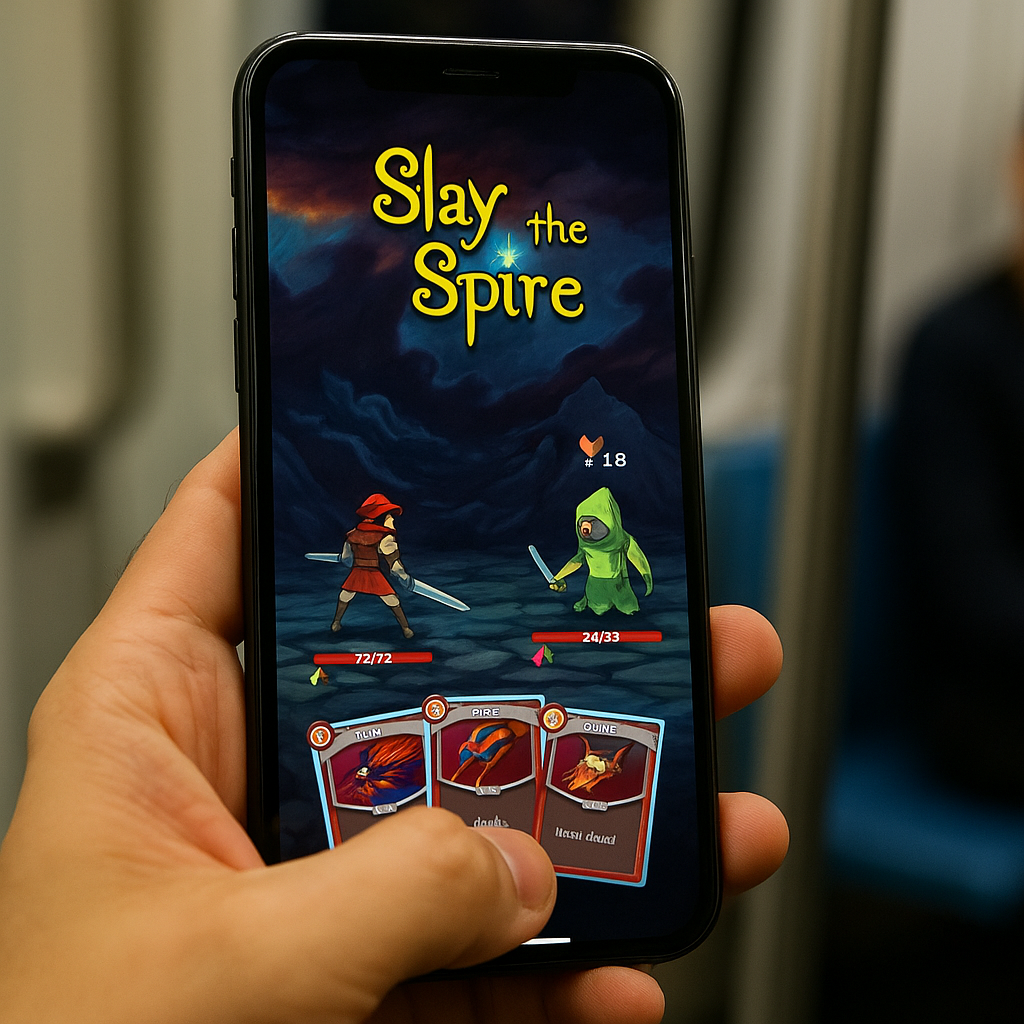
Slay the Spire is the rare mobile game that respects the way people use phones in real life. You will get interrupted. You will have to stand up. Someone will ask if this seat is taken. This game doesn't punish that. It's turn-based, it resumes cleanly, and it doesn't rely on twitch timing or you remembering some elaborate control scheme. You tap cards, you watch the intent icons, and you feel clever when your little stack of decisions clicks together.
Entertainment-wise, it scratches the same part of my brain as a good season of a show where you start recognizing patterns. On early runs you're just trying not to die. A week later you're noticing how one relic changes your entire route choice, or how a single card pickup can quietly ruin a deck that was otherwise humming. I love that it has its own language and the community has basically turned it into a shared set of stories: “I took the path with three elites and immediately regretted my confidence,” “I built around poison and the shop refused to sell me anything helpful,” that kind of thing. It's the kind of game you can talk about without sounding like you're describing accounting, even though, yes, you're doing math the whole time.
A small, hands-on phone tip: turn on “fast mode” in the settings the first time you boot it. On a touch screen, the normal animation speed can feel a little syrupy, and fast mode makes it snappy without turning it into visual noise. Also, if you're playing on a smaller screen, be deliberate about where your thumb rests. I've ended turns by accident while gripping my phone on a crowded platform. That particular pain is unforgettable, and you only need to learn it once.